
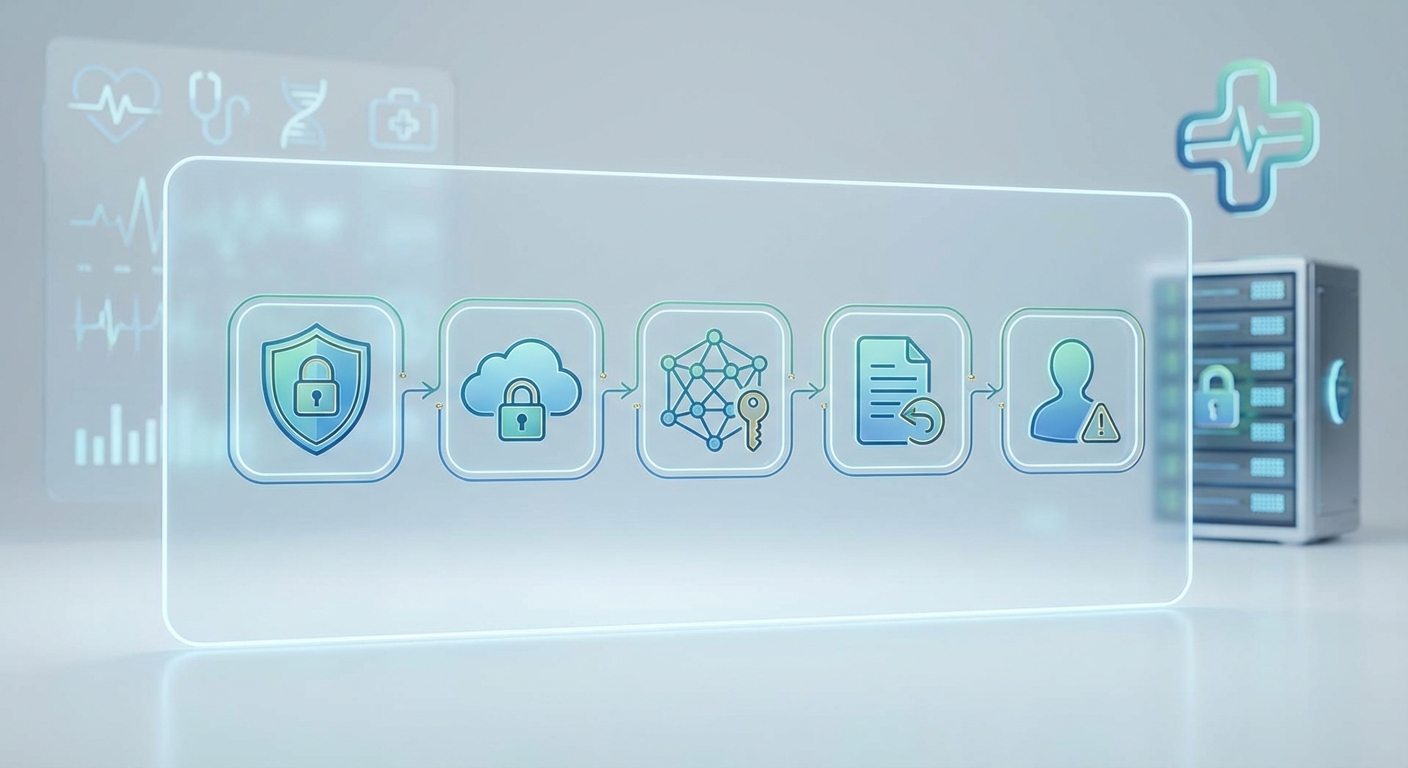
Your medical records contain some of the most sensitive information about you. From mental health diagnoses to genetic test results, this data can be used for identity theft, insurance fraud, or even blackmail if it falls into the wrong hands. Healthcare data breaches affected over 133 million patient records in 2023 alone, making it clear that hospitals and clinics can’t protect your information by themselves.
Protecting your medical records requires active participation from you as a patient. By using strong passwords, monitoring access logs, requesting encryption, limiting paper records, and staying alert to phishing attempts, you can significantly reduce your risk of becoming a victim of healthcare data breaches. Your health information is too valuable to leave unprotected.
Why healthcare data is such a valuable target
Medical records sell for ten times more than credit card numbers on the dark web. A stolen credit card can be canceled within hours, but your medical history stays with you forever.
Criminals use healthcare data to file fake insurance claims, obtain prescription drugs, and create false identities. Some even combine medical records with other stolen data to build complete identity profiles.
Healthcare organizations are particularly vulnerable. Many hospitals run outdated software systems that can’t be easily updated without disrupting patient care. Smaller clinics often lack dedicated IT security staff.
The human element makes things worse. A 2023 study found that 88% of healthcare data breaches involved human error, from clicking phishing emails to leaving computers unlocked.
Understanding your rights as a patient
You have legal rights when it comes to your medical information. The Health Insurance Portability and Accountability Act (HIPAA) gives you control over who sees your records and how they’re used.
You can request a list of everyone who has accessed your medical records in the past six years. This access log shows which staff members viewed your file and when.
You also have the right to request corrections to inaccurate information. If your records contain errors, you can submit a formal request to have them fixed.
Most importantly, you can restrict who sees your information. You can ask your healthcare provider to limit sharing your data with certain individuals or organizations.
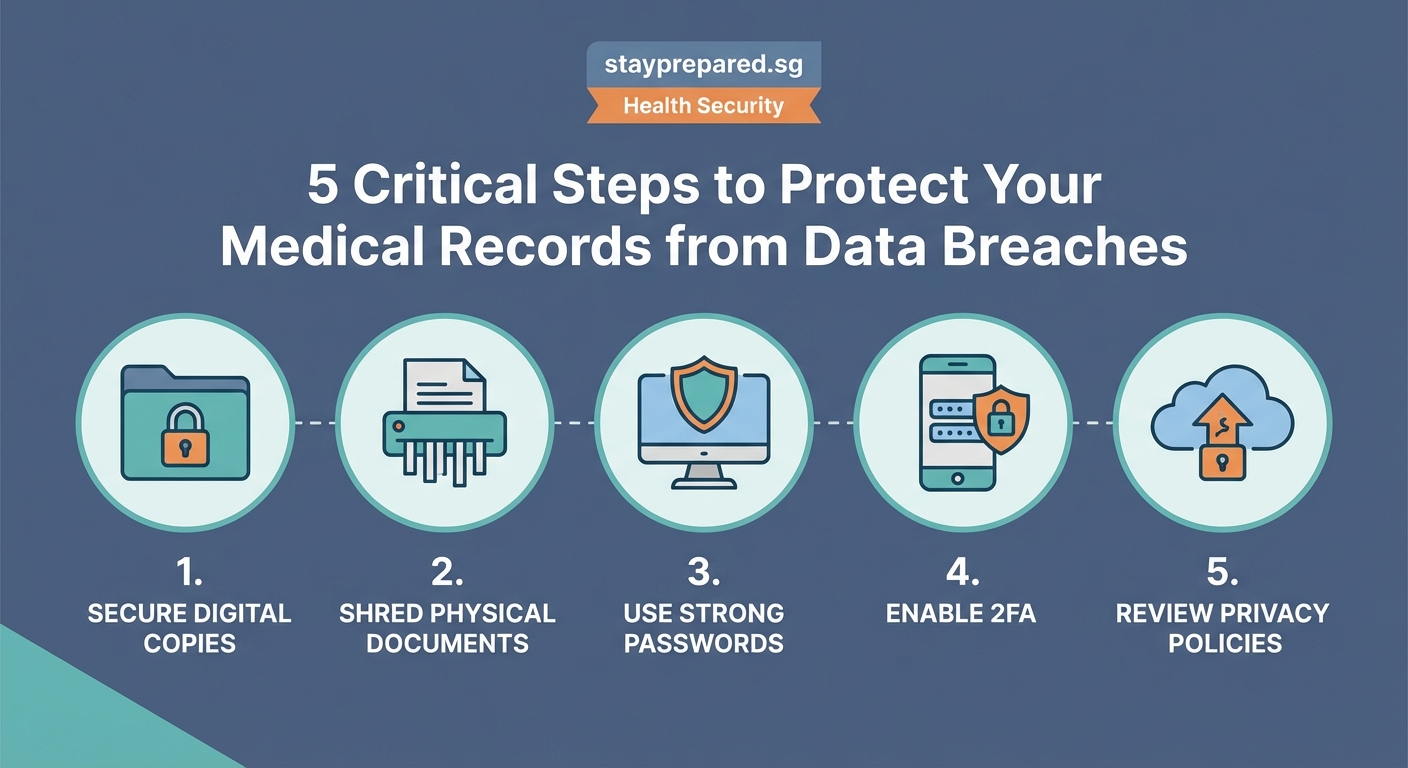
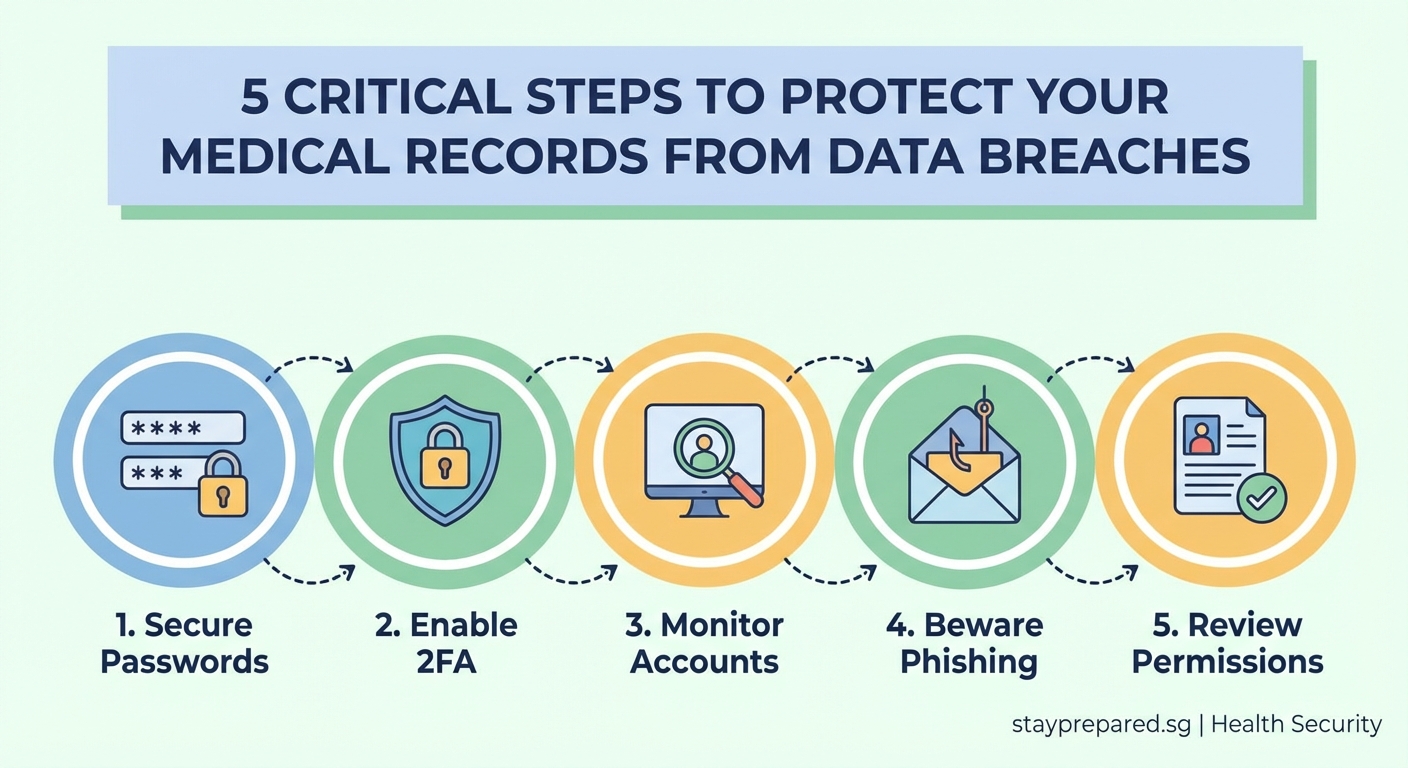
Five critical actions to secure your medical information
1. Create fortress-level passwords for patient portals
Your patient portal is the front door to your medical records. A weak password is like leaving that door wide open.
Use a unique password for each healthcare provider. Never reuse passwords across different medical systems.
Your password should contain at least 16 characters with a mix of uppercase letters, lowercase letters, numbers, and symbols. Avoid personal information like birthdays or pet names.
A password manager can generate and store complex passwords for you. This tool encrypts your passwords and requires one master password to access everything.
Enable two-factor authentication whenever it’s available. This adds a second verification step, usually a code sent to your phone, making it much harder for attackers to break in.
2. Monitor who accesses your records
Most healthcare systems keep detailed logs of who views your medical information. Request these logs every six months.
Look for access patterns that seem unusual:
- Staff members viewing your records when you didn’t have an appointment
- Multiple people accessing your file on the same day without reason
- Access from departments you’ve never visited
- Records viewed outside normal business hours
If you spot suspicious activity, report it immediately to your healthcare provider’s privacy officer. Every hospital and clinic is required to have one.
Some patient portals send automatic alerts when someone views your records. Turn on these notifications if they’re available.
3. Request encryption for electronic communications
Email is not secure by default. When your doctor’s office sends test results or appointment information via regular email, that data travels unencrypted.
Ask your healthcare providers if they offer encrypted email or secure messaging through their patient portal. Most modern systems include this feature.
Never send sensitive health information through regular email, text messages, or social media. These channels are easy for hackers to intercept.
If you must discuss medical information over the phone, verify you’re speaking to the correct person. Call back using the official number from your provider’s website rather than trusting caller ID.
4. Minimize paper records at home
Paper records create physical security risks. They can be stolen, photographed, or found in your trash.
Here’s how to handle paper medical documents safely:
- Scan important documents and store them on an encrypted external hard drive.
- Shred paper copies using a cross-cut shredder, not just tearing them up.
- Never throw medical documents in regular trash or recycling bins.
- Store any paper records you must keep in a locked filing cabinet or safe.
- Remove your name and medical information from prescription bottles before disposing of them.
Consider going paperless with your healthcare providers. Most offer electronic statements and test results through secure patient portals.
5. Recognize and avoid healthcare phishing scams
Phishing emails pretending to be from healthcare providers have become sophisticated. They often look identical to legitimate communications.
Common red flags include:
- Urgent requests to verify your account or update payment information
- Links that don’t match the official website address when you hover over them
- Generic greetings like “Dear Patient” instead of your name
- Spelling or grammar mistakes in the message
- Requests to open attachments you weren’t expecting
Never click links in emails claiming to be from your healthcare provider. Instead, open your browser and type the website address directly.
“The best defense against phishing is simple: when in doubt, don’t click. Go directly to the source by typing the website address yourself or calling the office using a number you know is legitimate.” – Healthcare Security Expert
Common mistakes that put your records at risk
Understanding what not to do is just as important as knowing the right steps to take.
| Risky Behavior | Why It’s Dangerous | Better Alternative |
|---|---|---|
| Using public WiFi to access patient portals | Hackers can intercept unencrypted data on public networks | Wait until you’re on a secure home or cellular network |
| Sharing login credentials with family members | Creates confusion about who accessed records and when | Use proper proxy or caregiver access features instead |
| Keeping the same password for years | Old passwords may have been exposed in other breaches | Change passwords every 6 months |
| Ignoring software updates on devices | Outdated software contains known security vulnerabilities | Enable automatic updates on all devices |
| Posting health information on social media | Public posts can be scraped and used for fraud | Keep health matters private or use closed groups only |
What to do if you suspect a breach
Speed matters when your medical data has been compromised. The faster you act, the more you can limit the damage.
Contact your healthcare provider’s privacy officer immediately. They’re required to investigate any suspected breaches within 60 days.
Place a fraud alert on your credit reports with all three major credit bureaus. This makes it harder for criminals to open new accounts in your name.
Review your medical records for fraudulent entries. Fake procedures or prescriptions in your file can affect your future care and insurance coverage.
File a complaint with the Department of Health and Human Services Office for Civil Rights if your provider doesn’t respond appropriately.
Monitor your insurance statements for claims you didn’t make. Report suspicious charges right away.
Teaching family members about medical data security
Your security efforts can be undermined if family members who have access to your information don’t follow the same practices.
Sit down with anyone who has legal access to your medical records. This might include spouses, adult children, or designated healthcare proxies.
Walk them through the security measures you’ve put in place. Make sure they understand why each step matters.
Create a shared document with important information:
- Which healthcare providers you use and their official contact numbers
- How to access patient portals securely
- What to do if they suspect a security problem
- Who to contact in an emergency
Children and elderly parents need special attention. Kids might not understand the value of medical privacy, while older adults are often targeted by healthcare scams.
Building a personal health information security plan
A written plan helps you stay consistent with security practices over time.
Start by listing all the places your medical information exists. Include hospitals, clinics, pharmacies, insurance companies, and any health apps you use.
For each location, document:
- Your username (not password)
- Whether two-factor authentication is enabled
- When you last changed your password
- How often you review access logs
- Special security features available
Set calendar reminders for regular security tasks. Schedule password changes, access log reviews, and security audits every six months.
Keep this plan in a secure location, either in a locked file or an encrypted digital document. Update it whenever you start seeing a new healthcare provider or change insurance.
Technology tools that add extra protection
Several tools can strengthen your medical data security beyond basic practices.
Virtual private networks (VPNs) encrypt your internet connection, making it safer to access patient portals even on less secure networks. Choose a reputable VPN service with a no-logging policy.
Password managers not only store your passwords but can also alert you if any of your credentials appear in known data breaches.
Identity theft protection services monitor the dark web for your personal information and alert you if your data appears for sale.
Encrypted backup solutions let you store copies of important medical documents safely. Look for services that offer zero-knowledge encryption, meaning even the company can’t access your files.
Special considerations for chronic conditions and frequent care
People who see multiple specialists or manage chronic conditions face unique challenges. Your medical information flows between many different systems and providers.
Create a master list of all your healthcare providers and how they share information. Ask each one:
- Which other providers they share your data with automatically
- How they transmit information (encrypted email, fax, portal)
- Whether you can opt out of certain types of sharing
- How long they retain your records
Coordinate care through one primary physician when possible. This reduces the number of systems storing your information.
Request that providers only share the minimum necessary information. They don’t need to send your entire medical history for every referral.
Protecting medical information during life transitions
Major life changes often create security gaps in how your medical information is handled.
When changing jobs, understand what happens to your health insurance records. Request that your old insurance company restrict access to your claims history.
Moving to a new city means transferring records to new providers. Ask your old providers to send records directly to new ones through secure channels rather than giving you paper copies to transport.
After a divorce, update all your healthcare proxies and emergency contacts. Remove your former spouse’s access to your patient portals unless they need it for co-parenting purposes.
When a family member passes away, their medical records still need protection. Identity thieves often target deceased individuals’ information.
Your health information deserves active protection
Medical data breaches won’t stop happening. Healthcare systems will continue to be targets as long as the information they hold remains valuable.
But you’re not powerless. Every security measure you implement makes it harder for criminals to access your information. Strong passwords, careful monitoring, and smart communication practices create layers of defense that most attackers won’t bother to penetrate.
Start with one action today. Change your patient portal password to something stronger. Check who accessed your records last month. Enable two-factor authentication. Each small step makes your medical information more secure.
Your health history is yours to protect. Take control of it now, before someone else does.