

Building a risk assessment framework sounds like the kind of project that spawns endless meetings and produces a binder no one reads. But it doesn’t have to be that way. A good framework helps you spot problems before they become disasters, makes decisions faster, and gives everyone a shared language for talking about what could go wrong. The best part? You can build one that actually gets used.
A working risk assessment framework starts with clear risk categories, simple scoring methods, and regular review cycles. Focus on making it easy to use rather than comprehensive. Include stakeholders early, document decisions transparently, and adjust the framework based on real feedback. The goal is a tool that helps people make better decisions, not one that sits on a shelf gathering dust.
Why most frameworks fail before they start
Most organizations approach risk assessment like they’re building a cathedral. They want every possible risk documented, every scenario mapped, every stakeholder consulted. Six months later, they have a 200-page document that’s outdated before it’s published.
The frameworks that work do the opposite. They start small, focus on the risks that actually matter, and evolve based on what people need. Think of it like learning to cook. You don’t start by mastering every cuisine. You learn a few core techniques and build from there.
Your framework needs three things to succeed: clarity about what you’re assessing, a consistent way to measure risks, and a process people will actually follow. Everything else is optional.
Define your risk categories first
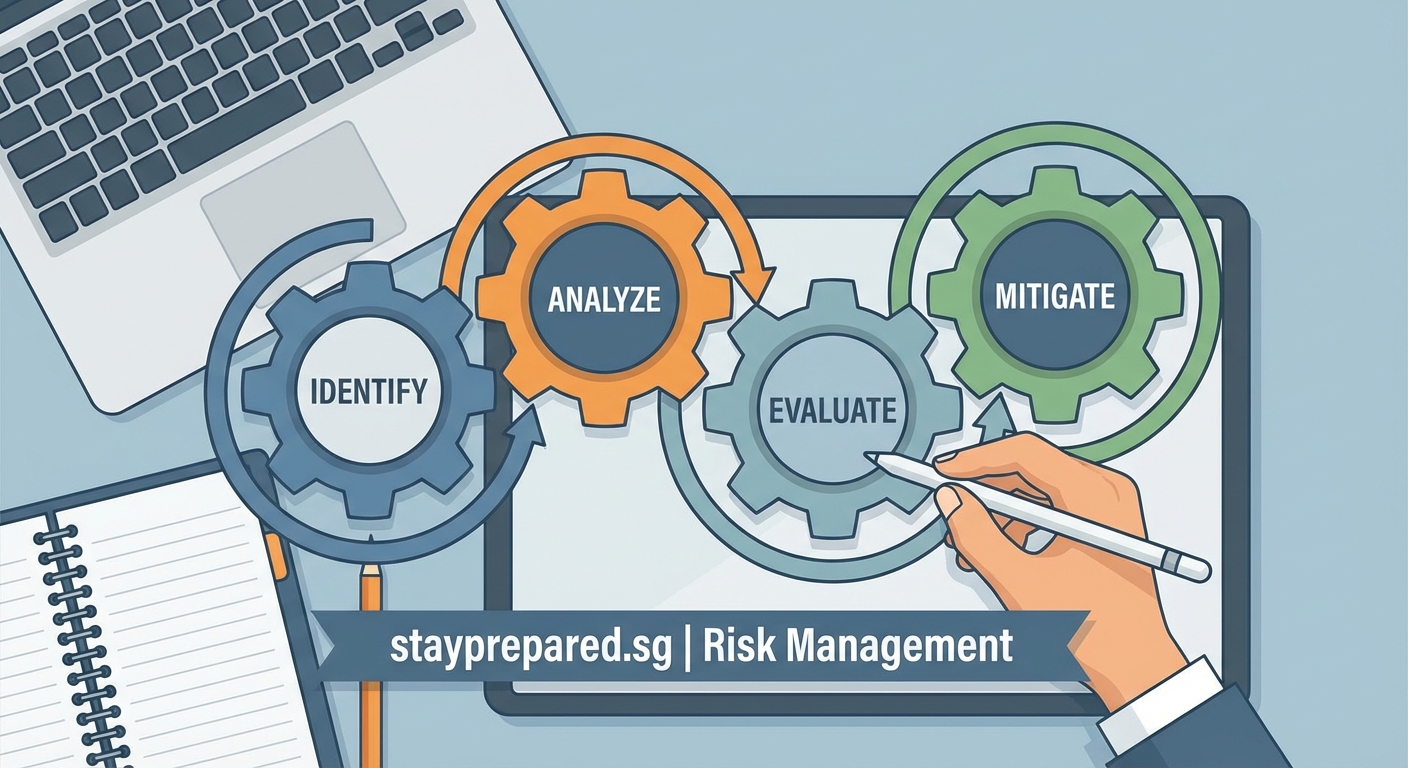
Before you can assess risks, you need to know what kinds of risks you’re looking for. This sounds obvious, but many frameworks fail here by being too vague or too specific.
Start by thinking about the major ways your organization could be hurt:
- Financial risks (budget overruns, funding gaps, fraud)
- Operational risks (system failures, supply chain disruptions, staffing shortages)
- Compliance risks (regulatory violations, contract breaches, legal issues)
- Reputational risks (public criticism, customer complaints, data breaches)
- Strategic risks (market changes, competitive threats, failed initiatives)
These categories give people a starting point. When someone says “we have a risk,” they can immediately slot it into one of these buckets. That makes the next steps clearer.
Don’t create more than seven categories. The human brain struggles to work with more than that. If you find yourself with ten or twelve categories, some of them probably overlap or belong under a broader heading.
Build a scoring system that makes sense
Here’s where most frameworks get complicated. They create elaborate matrices with five levels of likelihood and five levels of impact, resulting in 25 possible risk scores. Then they argue for hours about whether something is “likely” or “very likely.”
Keep it simple. Use a 3×3 matrix instead.
| Likelihood | Low Impact | Medium Impact | High Impact |
|---|---|---|---|
| Low | Monitor | Monitor | Assess |
| Medium | Monitor | Assess | Mitigate |
| High | Assess | Mitigate | Urgent |
This gives you nine possible outcomes, which is manageable. More importantly, it forces clear decisions. A risk is either low, medium, or high in each dimension. No hedging with “medium-high” or other in-between categories.
Define what each level means for your organization:
Likelihood:
– Low: Could happen, but hasn’t in similar situations
– Medium: Has happened occasionally in the past
– High: Happens regularly or is currently developing
Impact:
– Low: Minor disruption, resolved within days
– Medium: Significant disruption, takes weeks to resolve
– High: Major disruption, takes months to resolve or causes lasting damage
These definitions will vary based on your organization’s size and industry. A “high impact” event for a startup looks different than for a multinational corporation. The key is that everyone using the framework understands what the levels mean.
Create a practical assessment process
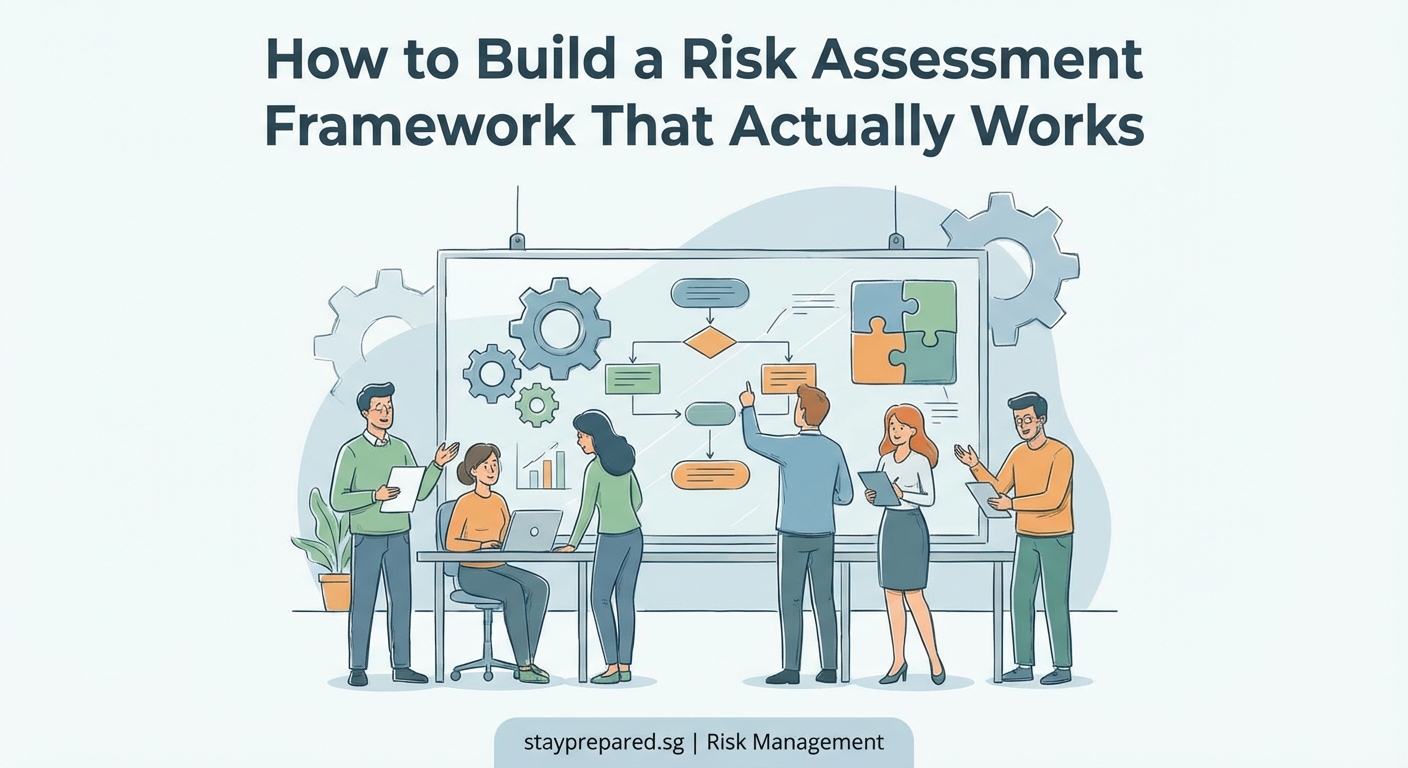
Now you need a process for actually using your framework. This is where theory meets reality. A process that’s too complex won’t get followed. One that’s too simple won’t catch important risks.
Here’s a process that works:
-
Identify the risk: Someone spots a potential problem and documents it in one or two sentences. Keep it specific. “We might lose customers” is too vague. “Our main supplier is having financial problems and might close in Q3” is specific.
-
Categorize and score: The person who identified the risk (or a small team) assigns it to a category and gives it initial likelihood and impact scores. This takes minutes, not hours.
-
Review and validate: A risk owner (usually a manager or team lead) reviews the assessment within a week. They can adjust the scores or send it back for more information.
-
Determine response: Based on the matrix, decide what to do. Monitor means you track it but don’t act yet. Assess means you gather more information. Mitigate means you take action to reduce likelihood or impact. Urgent means you act immediately.
-
Document and track: Record the risk, scores, response plan, and owner in a central location. This can be a spreadsheet, a project management tool, or specialized risk software. The tool matters less than using it consistently.
-
Review regularly: Set a schedule for reviewing all active risks. Monthly works for most organizations. Quarterly is too slow. Weekly is usually overkill unless you’re in a crisis.
This process should take 15-30 minutes for most risks, not days of analysis. Speed matters because risks change. A low-likelihood risk can become high-likelihood fast.
Get the right people involved
Your framework is only as good as the people using it. You need input from different levels and functions, but not so many people that decisions become impossible.
Start with a core risk team of three to five people. This should include someone from operations, someone from finance, and someone from senior leadership. They own the framework and make final calls on scoring disputes.
Then identify risk champions in each department or team. These people don’t assess every risk, but they help their colleagues understand the framework and escalate risks that need attention. They’re your early warning system.
The best risk frameworks are built by the people who will use them, not imposed from the top. Involve frontline staff early. They see problems before managers do and they’ll tell you if your process is too complicated or missing something important.
Avoid creating a risk committee that has to approve everything. Committees slow decisions and diffuse accountability. Instead, give individuals clear authority to assess and respond to risks within their area, with escalation paths for bigger issues.
Test your framework with real scenarios
Before you roll out your framework across the organization, test it with real risks from the past year. Pick three or four situations where something went wrong or could have gone wrong.
Walk through your process with each scenario:
- Would the risk have been identified early enough?
- Would the scoring have matched the actual severity?
- Would the response process have helped?
- What would have gotten in the way?
This testing reveals gaps you didn’t anticipate. Maybe your categories don’t cover a common risk type. Maybe your impact definitions don’t account for reputational damage. Maybe your review schedule is too slow for operational risks.
Adjust based on what you learn. This is much easier to do before you’ve trained 200 people on a process that doesn’t quite work.
Common mistakes that undermine frameworks
Even well-designed frameworks can fail in practice. Here are the mistakes that kill adoption:
Making it too comprehensive: You don’t need to assess every possible risk. Focus on the ones that could actually hurt you. A framework that tries to cover everything ends up being useful for nothing.
Requiring too much documentation: If people have to fill out five pages to report a risk, they won’t report risks. Keep initial documentation to the essentials: what’s the risk, why does it matter, what should we do about it?
Separating risk from decision-making: Risk assessment should inform decisions, not be a separate exercise. If your framework produces reports that sit in a drawer while decisions get made in meetings, something’s wrong.
Forgetting to update it: Risks change. Your framework needs to change too. Plan for a yearly review of the framework itself. Are the categories still relevant? Are the scoring definitions still accurate? Is the process still working?
Punishing people for identifying risks: This is the fastest way to kill a risk culture. If someone gets blamed for pointing out a problem, people stop pointing out problems. Make it clear that identifying risks is valued, even when the news is bad.
Make your framework part of daily work
The best risk frameworks don’t feel like extra work. They become part of how people think about their jobs.
Integrate risk discussions into existing meetings. When you’re planning a new project, spend five minutes talking about what could go wrong. When you’re reviewing monthly results, ask what risks materialized and what new ones appeared.
Use your risk categories in everyday language. Instead of saying “we have a problem with the vendor,” say “we have an operational risk with the vendor.” This reinforces the framework and makes it feel natural.
Celebrate good risk management. When someone identifies a risk early and helps prevent a problem, recognize them publicly. This shows that the framework has value and encourages others to use it.
Adjust based on what actually happens
Your first version won’t be perfect. That’s fine. The goal is to start using something and improve it based on real experience.
Set up a feedback loop. After you respond to a major risk, do a brief review:
- Did we identify it early enough?
- Were our scores accurate?
- Did our response work?
- What would we do differently?
Collect this feedback and review it quarterly. Look for patterns. If you consistently underestimate certain types of risks, adjust your definitions. If one category is never used, maybe you don’t need it. If people are working around the process, find out why and fix it.
A framework that evolves based on feedback stays relevant. One that’s set in stone becomes obsolete.
Turn assessment into action
The point of assessing risks isn’t to create a list. It’s to do something about them. Your framework should make the path from identification to action clear and fast.
For each risk level in your matrix, define what action looks like:
Monitor: Assign an owner who checks on this risk monthly. Set triggers that would escalate it to the next level. Example: “If the supplier misses two deliveries, escalate to Assess.”
Assess: Gather more information within two weeks. Talk to experts, run scenarios, check data. Decide whether to mitigate or downgrade to monitor.
Mitigate: Develop and implement a response plan within 30 days. This might mean reducing likelihood (find a backup supplier), reducing impact (build inventory buffer), or both.
Urgent: Act immediately. Cancel the risky activity, implement emergency measures, or escalate to senior leadership for a major decision.
These timeframes will vary for your organization, but having them prevents risks from sitting in limbo while everyone assumes someone else is handling it.
Your framework is ready when people use it without being asked
You’ll know your framework is working when people start using it naturally. Someone mentions a risk in a meeting and immediately categorizes it. A team lead reviews risks without being reminded. New employees ask about the risk process during onboarding.
That’s the goal. Not a perfect system that covers every edge case, but a practical tool that helps people make better decisions about uncertainty.
Start simple, test with real situations, and adjust based on what works. Your framework will grow with your organization’s needs. The important thing is to start now, with something people will actually use.