
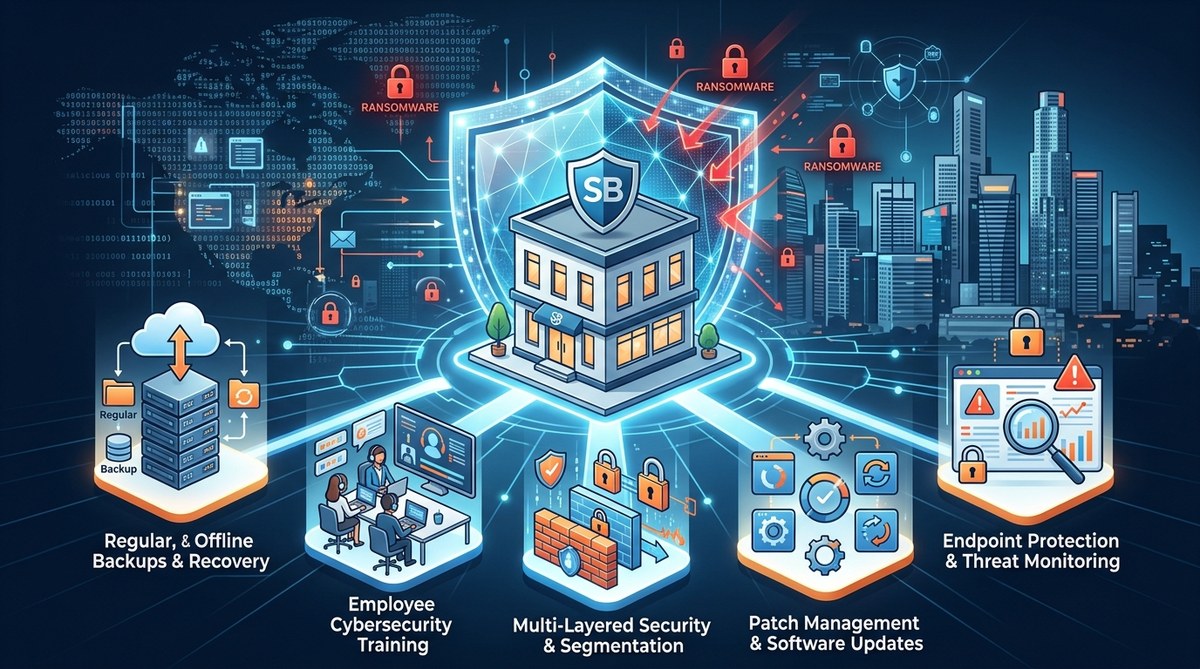
Protecting your small business from ransomware is more than just an IT concern. It’s about safeguarding your livelihood, reputation, and customer trust. Cybercriminals increasingly target small businesses because they often lack the robust defenses larger companies have. But with the right strategies, you can significantly lower your risk and be ready to respond if an attack occurs. This guide walks you through effective ransomware defense strategies tailored specifically for small businesses.
Small businesses face rising ransomware threats but can defend themselves effectively by implementing layered security measures, maintaining reliable backups, and training staff. These strategies help prevent attacks and ensure quick recovery if compromised.
Why Small Businesses Are Prime Targets for Ransomware
Cybercriminals see small businesses as easy prey. They often have weaker security systems and less cybersecurity awareness. Many small companies don’t prioritize security, making them attractive targets. Attackers can deploy ransomware via phishing emails, malicious links, or exploiting unpatched vulnerabilities. Once inside, they encrypt critical data and demand a ransom for decryption keys.
Small businesses suffer not just from data loss but also operational downtime, which can be costly. A ransomware attack can shut down your operations for days or weeks, leading to lost revenue and damaged customer trust. Criminals also sometimes use double extortion tactics, threatening to publish stolen data if the ransom isn’t paid.
Ransomware’s Impact on Small Businesses
The consequences are severe. According to recent reports, small businesses that fall victim often face:
- Extended operational disruptions
- Significant financial loss
- Damage to reputation
- Potential legal issues if customer data is compromised
- Increased insurance premiums or difficulty obtaining coverage
In some cases, small firms pay hefty ransoms, only to see their data remain locked or face repeated attacks. Prevention is always better than dealing with the aftermath.
How Ransomware Attacks Small Businesses
Attack methods are varied but often hinge on social engineering. Phishing emails lure employees into clicking malicious links or opening infected attachments. Other common techniques include exploiting unpatched software vulnerabilities or using weak passwords. Once inside, attackers encrypt files, lock systems, and demand payment.
Here are some ways ransomware gets into your network:
- Phishing emails with malicious links or attachments
- Remote desktop protocol (RDP) vulnerabilities
- Malicious ads or fake websites
- Supply chain compromises
To prevent these, you must adopt a comprehensive defense approach.
The Critical Components of Ransomware Defense Strategies
Effective ransomware defense isn’t about one magic fix. It involves multiple layers of security that work together. Here are key tactics every small business should consider:
1. Employee Training and Awareness
Your staff are your first line of defense. Conduct regular cybersecurity awareness sessions focusing on recognizing phishing scams, suspicious links, and social engineering tactics. Teach them to verify senders and avoid sharing credentials.
2. Strong Authentication and Access Controls
Implement multi-factor authentication (MFA) across all critical systems and accounts. Enforce the principle of least privilege, ensuring employees only access what they need. Regularly review user permissions to prevent unauthorized access.
3. Keep Systems Updated and Patched
Cybercriminals exploit known vulnerabilities in outdated software. Make sure your operating systems, applications, and security tools are always up to date. Automate updates where possible to avoid neglect.
4. Maintain Immutable and Isolated Backups
Backups are your safety net. Use immutable backups that cannot be altered or deleted by ransomware. Store copies offsite or in cloud environments that are isolated from your network. Test backup restores periodically to confirm data integrity.
5. Deploy Advanced Security Tools
Anti-malware solutions, endpoint detection and response (EDR), and intrusion prevention systems can identify and stop ransomware before it causes damage. Configure these tools to scan regularly and alert your team of suspicious activity.
6. Network Segmentation and Firewall Configuration
Divide your network into segments to contain potential breaches. Use firewalls to control traffic and block malicious connections. Disable unnecessary services and close unused ports.
7. Incident Response Planning
Prepare a clear, actionable plan for responding to ransomware incidents. Define steps for containment, eradication, recovery, and communication. Regularly test your plan through drills.
How To Implement Ransomware Defense Strategies in Your Small Business
Implementing these strategies involves a step-by-step approach. Here’s a practical process to follow:
1. Conduct a thorough risk assessment
Identify critical assets, vulnerabilities, and potential entry points. Use https://stayprepared.sg/how-to-build-a-risk-assessment-framework-that-actually-works/ to guide your assessment process.
2. Develop and enforce security policies
Create clear policies on password management, access controls, and incident response. Make sure every employee understands and follows them.
3. Invest in security tools and infrastructure
Choose reputable security solutions tailored for small businesses. Deploy endpoint protection, firewalls, and backup systems. Regularly update and tune these tools to stay effective.
4. Train staff regularly
Schedule ongoing training sessions. Use real-world examples to demonstrate phishing tactics and safe online practices.
5. Maintain and test backups
Follow the 3-2-1-1-0 backup rule: three copies of data, on two different media, with one stored offline, one stored in the cloud, and zero errors during restore tests.
6. Monitor and audit network activity
Use intrusion detection systems and security logs to spot suspicious behavior early. Conduct periodic audits to identify gaps.
7. Prepare for incidents
Create an incident response plan and rehearse it. Know who to contact, how to isolate infected devices, and how to communicate with stakeholders.
Common Mistakes Small Businesses Make — and How to Avoid Them
| Techniques | Common Mistakes |
|---|---|
| Regular backups | Not testing backups regularly |
| Employee training | Relying on one-time training |
| Updating software | Neglecting patches and updates |
| Using default passwords | Failing to enforce strong, unique passwords |
| Network segmentation | Keeping all systems on a flat network |
“The most effective defense is a layered approach. No single measure can stop ransomware on its own. Combining training, technology, and policies creates a resilient shield.” — Cybersecurity expert
Staying Resilient After an Attack
Even with all precautions, no system is 100 percent invulnerable. If an attack occurs:
- Isolate infected machines immediately
- Notify your IT team or cybersecurity provider
- Do not pay the ransom without consulting experts
- Follow your incident response plan
- Restore data from clean backups
- Review how the attack happened and improve defenses
Final Thoughts on Ransomware Defense for Small Business
Building a strong ransomware defense requires ongoing effort. Regularly review your security posture, stay updated on emerging threats, and foster a culture of cybersecurity awareness. Remember that prevention is better than cure, but being prepared to respond swiftly can save your business from disaster. Start implementing these strategies today, and make cybersecurity an integral part of your business growth journey.
By adopting these practical steps, you’ll be better positioned to face ransomware threats confidently. Protect your business, your data, and your future by staying informed and proactive.