
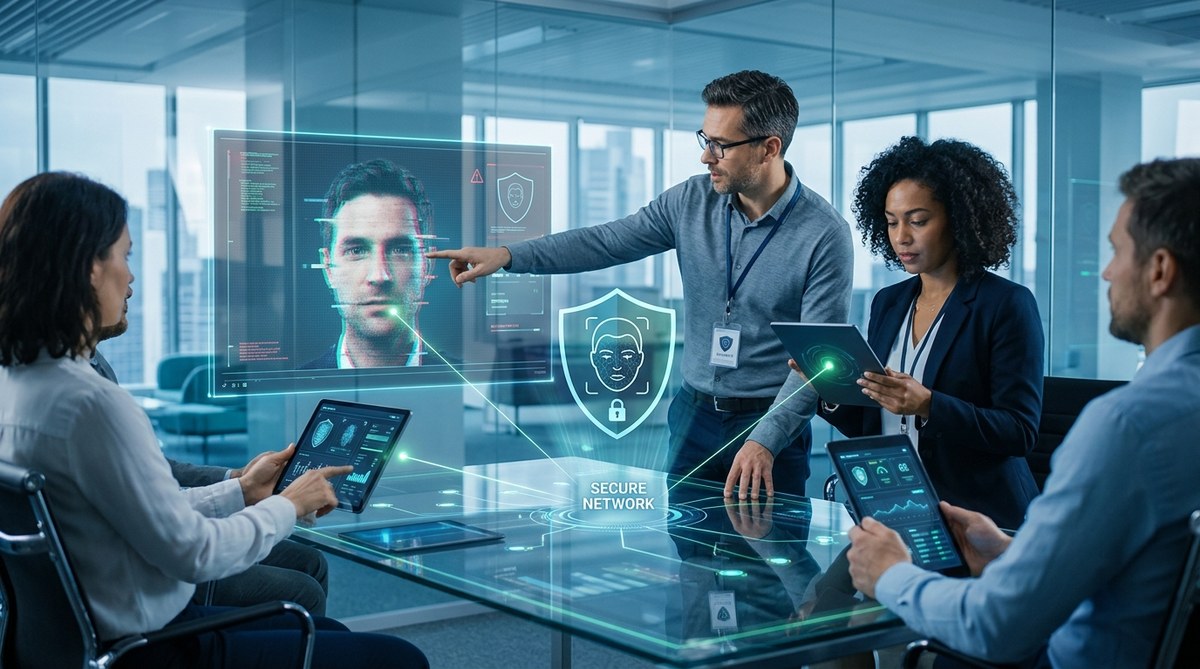
You get a video call from your CEO. The voice is right. The face is right. They ask you to authorize a six figure wire transfer to a new vendor. You do it. Later you find out it was a deepfake. Every detail was fabricated using AI tools that are now cheap and widely available. This is not a hypothetical. It happened to a multinational engineering firm in early 2026. The loss was in the millions. Deepfake fraud is rising fast, and it targets businesses like yours.
Deepfake fraud is no longer science fiction. In 2026, voice cloning and synthetic video make it possible for criminals to impersonate anyone in your organization. To protect your business, you need a layered defense: strong verification protocols, employee awareness training, AI detection tools, and a tested incident response plan. This guide gives you the steps to reduce risk starting today.
How deepfake fraud actually works in 2026
Deepfake fraud uses artificial intelligence to create convincing fake audio, video, or images. In the business world, attackers typically clone the voice or likeness of a trusted executive, partner, or client. They use social engineering to trick employees into transferring money, sharing sensitive data, or approving fraudulent invoices.
The technology has improved drastically. In 2023, you could often spot a deepfake by looking for glitchy eye movements or unnatural blinking. By 2026, the best tools produce near perfect results. Attackers only need a few seconds of a person’s voice to clone it. They scrape social media, YouTube clips, or internal meeting recordings.
Common attack scenarios include:
- CEO fraud: An attacker spoofs the CEO’s voice and phone number to demand an urgent payment.
- Vendor impersonation: A fake supplier asks your accounts payable team to update bank details.
- Boardroom sabotage: A synthetic video of a board member changes a critical vote.
- HR deception: A deepfake of an HR director authorizes a fake employee onboarding.
A single successful attack can cost your business hundreds of thousands of dollars, not counting the reputational damage. According to data from early 2026, deepfake related fraud attempts have increased by more than 300% compared to 2024.
Why traditional security measures won’t cut it
Standard defenses like email filters and two factor authentication (2FA) were designed to stop phishing and credential theft. They do not catch a real time voice call that perfectly mimics your CFO. Passwords and tokens mean nothing when the attacker already sounds like the boss.
The problem is that deepfakes bypass the human trust layer. Your employees trust what they see and hear. If a deepfake looks and sounds like their manager, they will follow instructions. Traditional risk management often overlooks the human element. As we discuss in why traditional risk management fails in the age of AI and cyber threats, old assumptions about verification no longer hold.
You need a new playbook.
5 practical steps to protect your business from deepfake fraud
Here is a numbered list of actions you can implement this week.
-
Establish a code word system for sensitive requests. Pick a unique word or phrase that only trusted executives and finance staff know. For any verbal or video request to transfer money, change vendor details, or share credentials, require that code word. Make it unpredictable and change it monthly.
-
Deploy AI powered deepfake detection tools. Several security vendors now offer real time analysis of audio and video calls. These tools look for micro expressions, acoustic artifacts, and metadata inconsistencies that humans miss. Invest in a solution that integrates with your video conferencing and phone systems.
-
Create a strict multi person approval workflow. No single person should authorize large payments or sensitive data changes. Require at least two approvals from different departments, and verify each approval through a separate channel (e.g., one via phone call, one via internal chat with private key).
-
Train your employees on deepfake red flags. Run monthly awareness sessions. Show them examples of deepfakes and teach them to verify unusual requests. Emphasize that if something feels off, they should stop and use a fallback verification method. For a deeper look at building an overall incident playbook, see how to create an incident response plan that actually works.
-
Simulate deepfake attacks on your own team. Hire a red team to create fake CEO calls or fake vendor videos. Test whether your staff follows protocol. Use the results to improve training and close gaps.
Attack types, detection methods, and common mistakes
The table below compares the most common deepfake fraud techniques, how to detect them, and the mistakes businesses make when trying to respond.
| Attack type | How it works | Best detection method | Common mistake |
|---|---|---|---|
| Voice cloning | Attacker uses 30 seconds of audio to mimic a specific person | AI voice analysis; ask a specific question only the real person would know | Assuming caller ID is reliable |
| Video deepfake | Synthetic video of executive giving instructions | Real time liveness detection; look for unnatural blinking or lighting inconsistencies | Trusting video evidence without cross verification |
| Hybrid (voice + email) | Voice call to create urgency, then email with payment details | Use out of band verification (call back on a known number) | Relying solely on email security filters |
| Real time deepfake in video calls | Live face swap or voice overlay during a Zoom call | Require participants to use a shared secret phrase before discussing sensitive topics | Not monitoring for latency or audio mismatches |
Expert advice: “The most dangerous deepfakes are the ones you never suspect. Attackers don’t need perfection. They just need enough realism to bypass human trust. Always verify through a separate, independent channel before acting on any urgent financial or data request.” — Sarah Chen, Cybersecurity Consultant specializing in AI fraud.
Warning signs your business might already be a target
Use this bulleted list as a quick reference for red flags.
- You notice an increase in unusual requests from executives, especially outside normal hours.
- Employees report receiving strange calls or emails that sound “off” but not obviously fake.
- Your company’s public facing videos or audio clips have been downloaded or re uploaded without permission.
- New vendor bank details change at the last minute, or invoices arrive with slightly different formatting.
- A voice or video call has a delay that doesn’t match typical network latency.
If any of these sound familiar, treat it as a signal to tighten your defenses. You might also want to read about 5 ways deepfake technology threatens corporate security and personal privacy for additional context.
Building a culture of verification
Technology alone won’t save you. Your people are the first and last line of defense. Foster a culture where it is okay to question authority. Make it easy for employees to say “I need to verify that” without fear of looking slow or difficult.
Regularly review your risk management lifecycle from identification to continuous monitoring to ensure deepfake threats are included. Update your risk register to reflect the specific scenarios we covered. Test your defenses at least twice a year.
Deepfake fraud is evolving. But with the right mix of policies, tools, and human awareness, you can protect your business. Start with the code word system tomorrow morning. Expand from there.
Your next move: make deepfake defense a permanent part of your operations
Deepfake attacks are not going away. They will get more sophisticated and cheaper to execute. By 2027, experts predict that nearly every organization will face at least one attempt. The businesses that survive those attempts will be the ones that prepared early.
You have the knowledge now. Use it. Share this guide with your security team, your finance department, and your executive leadership. Run a tabletop exercise based on a deepfake scenario. See where your current controls break down. Patch those gaps.
Protecting your business from deepfake fraud is not a one time project. It is an ongoing commitment to questioning what you see and hear. Stay alert, stay curious, and always verify.