
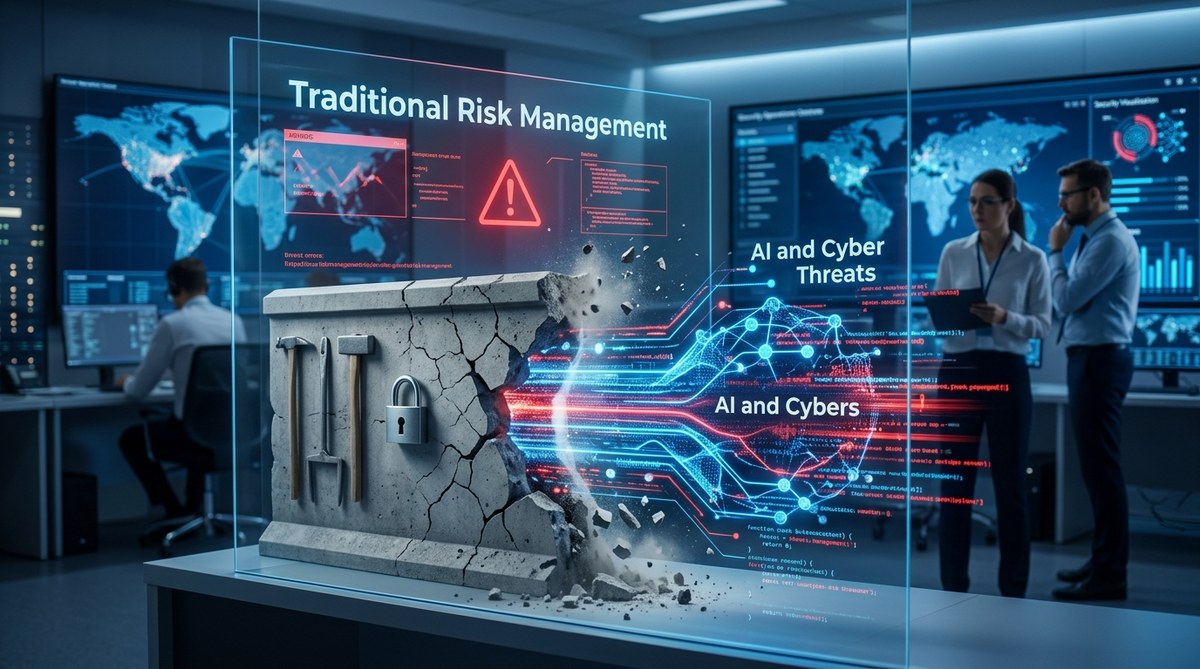
Risk management has long been a core part of organizational safety and stability. Traditional approaches, which rely on static assessments and fixed controls, worked reasonably well for predictable environments. But in the age of artificial intelligence and rapid cyber threats, these methods are no longer enough. Risks are emerging faster, more unpredictably, and with consequences that can ripple across entire systems. Relying solely on old frameworks can leave organizations exposed to serious vulnerabilities. Understanding why traditional risk management falls short is crucial for staying resilient in today’s digital landscape.
Traditional risk management often relies on static assessments and fixed controls, which struggle to keep pace with AI and cyber threats. Modern risks require dynamic, continuous frameworks that adapt quickly to evolving challenges and new vulnerabilities. Without these updates, organizations risk being caught off guard by fast-moving digital dangers and weaknesses in their defenses.
The limits of static risk assessments in a dynamic threat landscape
Traditional risk management often depends on periodic reviews and static risk registers. These tools are designed to identify known vulnerabilities at a specific point in time. The problem is that AI systems and cyber threats do not stay still. They evolve rapidly, sometimes within days or even hours. Static assessments become outdated the moment they are completed. This means organizations are operating based on incomplete or obsolete information.
For example, a company might identify cybersecurity risks associated with its existing infrastructure. However, if a new AI-powered attack vector emerges shortly after, the static risk register provides no guidance on how to respond. This gap leaves organizations vulnerable to zero-day exploits, model drift, or new attack techniques that exploit AI systems’ black-box nature.
Why AI and cyber threats expose weaknesses in traditional frameworks
AI systems introduce vulnerabilities that traditional risk frameworks are not designed to handle. These include:
- Opacity of algorithms: Many AI models are complex and difficult to interpret. This makes it hard to assess risks accurately or understand how decisions are made.
- Model drift: Over time, AI models can become less accurate as the environment changes, requiring continuous monitoring and updating.
- Autonomy and unpredictability: AI agents can act in unexpected ways, especially if adversaries manipulate inputs or training data.
- Rapid threat evolution: Cyber criminals leverage AI to automate attacks, adapt quickly, and develop new tactics faster than traditional defenses can respond.
A static risk assessment that does not account for these factors risks missing critical vulnerabilities. It also hampers organizations from implementing real-time responses or adapting governance practices to emerging threats.
The cyber risks of neglecting modern risk frameworks
Cyber attacks are growing in sophistication and frequency, especially with AI at the attacker’s disposal. Many organizations still rely on traditional controls such as firewalls, antivirus software, and periodic vulnerability scans. While these are necessary, they are not sufficient in an environment where threats evolve in real time.
For instance, AI-driven spear-phishing campaigns can bypass traditional filters by personalizing messages based on social media data. Deepfake technology can impersonate executives or customers, creating trust issues and facilitating fraud. Without a modern, adaptive risk management system, these threats can slip through defenses.
Practical processes for updating risk management in the age of AI
To close the gap, organizations should adopt processes that emphasize agility and continuous improvement. Here are three steps to get started:
- Implement real-time monitoring and alerts: Use platforms that provide live indicators of risk, rather than relying on quarterly reports. This helps identify new vulnerabilities as they appear.
- Develop dynamic risk models: Shift from static registers to models that learn and adapt based on new data and threat intelligence.
- Assign clear ownership and accountability: Ensure that risk ownership is distributed across teams and that there are protocols for rapid response when new threats are detected.
Bulleted list for quick scanning
- Static assessments quickly become outdated as AI systems and cyber threats evolve.
- AI adds vulnerabilities like opacity, model drift, and autonomous actions.
- Cybercriminals use AI to automate and personalize attacks.
- Traditional controls are insufficient for managing dynamic, AI-driven threats.
- Continuous monitoring, adaptive models, and clear ownership are key to resilience.
Techniques versus mistakes table
| Techniques for modern risk management | Common mistakes to avoid |
|---|---|
| Real-time risk indicators | Relying solely on periodic reviews |
| Adaptive, learning risk models | Ignoring AI-specific vulnerabilities |
| Cross-team ownership and accountability | Maintaining siloed controls |
| Continuous threat intelligence updates | Underestimating AI’s impact on security |
| Automated response protocols | Using static policies in a dynamic environment |
“Organizations that fail to evolve their risk management practices risk being overwhelmed by the speed and complexity of modern threats. Staying ahead requires agility, continuous learning, and shared responsibility.” — Cybersecurity expert
Bridging the gap between old methods and new realities
The core issue is that traditional risk management practices were built around predictable, static environments. Today, risks are fluid, often driven by AI and cyber criminals who leverage automation, data manipulation, and autonomous systems. To stay resilient, organizations must rethink their approach.
This means moving away from fixed checklists toward models that integrate real-time data, machine learning, and proactive governance. It also involves training teams to understand AI vulnerabilities and adopting tools that can adapt as threats evolve.
How to build a risk management approach that works today
- Prioritize continuous data collection: Gather threat intelligence from multiple sources and ensure systems are set up to flag anomalies immediately.
- Use AI to monitor AI: Leverage AI-enabled security platforms that can detect unusual behaviors or model drift more effectively than manual methods.
- Foster cross-functional collaboration: Risk ownership should be shared across IT, security, compliance, and leadership to ensure rapid response and shared understanding.
By embracing these steps, organizations can turn risk management into an active, responsive process rather than a static, delayed one.
Making resilience a daily practice
Risk management in the modern era is less about avoiding all risks and more about resilience. It’s about creating systems that can adapt, respond, and recover swiftly from threats. Static controls and periodic reviews are no longer enough.
Training teams to recognize new attack patterns, integrating automated monitoring, and maintaining an open dialogue about emerging vulnerabilities can make a significant difference. Remember, the goal is to stay a step ahead, not just react after the damage is done.
Staying resilient in the face of rapid digital change
As AI and cyber threats continue to accelerate, organizations that cling to outdated methods will find themselves at a disadvantage. The key is adopting a mindset of agility, continuous learning, and shared responsibility. Modern risk management is not a one-time project but a living, breathing part of organizational culture.
Implementing these principles will help you better anticipate, detect, and respond to risks. It’s about shifting from static, reactive controls to proactive, adaptive strategies that keep pace with the fast-moving digital world.
Remember, in risk management, staying ahead means staying informed, prepared, and flexible. Your organization’s resilience depends on it.
Stay prepared for the future of risk management by continuously updating your strategies and leveraging modern tools. The landscape is changing fast, but with a proactive approach, you can protect your organization from today’s most urgent AI and cyber threats.