
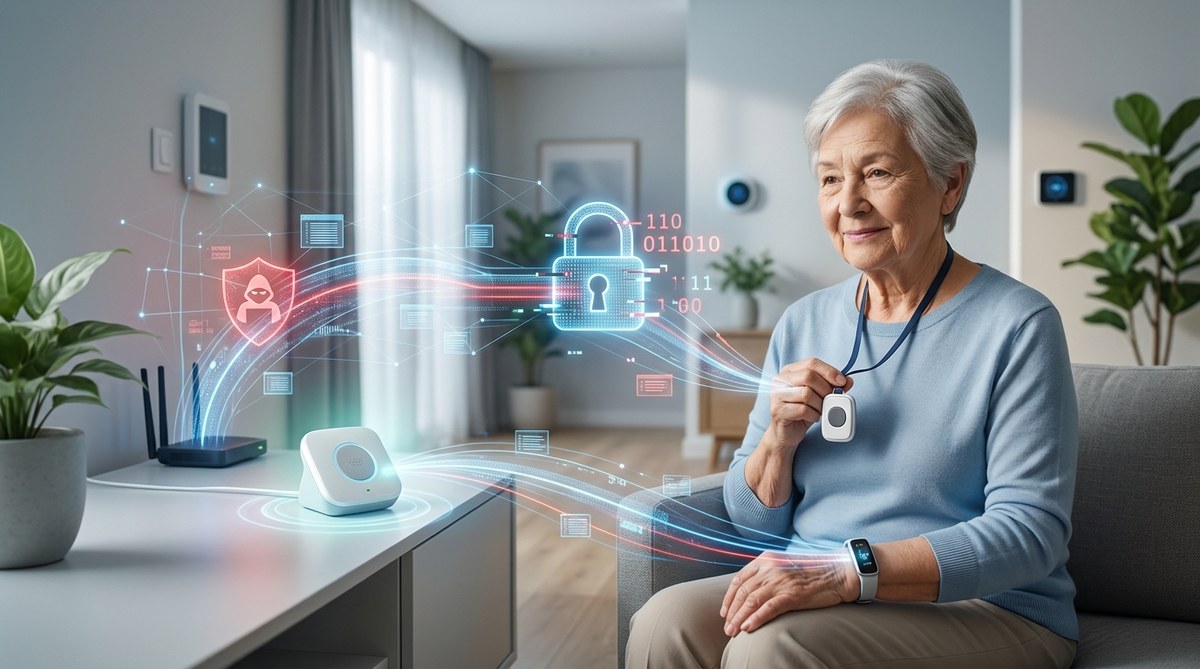
Your mother just got a new medical alert pendant. It has fall detection, GPS tracking, and a two-way speaker. You feel relieved knowing she can press a button and get help instantly. But there is a question you might not have asked yet. What happens if someone else presses that button? Not your mom. Not a paramedic. A stranger sitting in a different state, or even a different country.
Smart home medical alert system cybersecurity risks are not science fiction. They are a real and growing concern for caregivers and elderly individuals who rely on these connected health devices. The same technology that can save a life can also expose that life to hacking, data theft, and privacy violations.
Smart medical alert systems are vulnerable to hacking, data breaches, and privacy invasions because they rely on constant internet connectivity and often lack strong security features. By understanding the specific risks and following simple protection steps like updating firmware, using strong passwords, and securing your home Wi-Fi, you can keep your loved one safe without sacrificing the benefits of modern health technology.
How Hackers Target Medical Alert Systems
Medical alert devices look harmless. They are small, wearable, and designed to help. But inside that tiny pendant or wristband is a computer that connects to the internet. It sends data about your location, your activity, and your health status to a central server. That data is valuable.
Hackers target these systems for a few reasons. First, the data itself is worth money on the black market. Health records sell for more than credit card numbers because they contain personal details that are hard to change. Second, the device can be used as an entry point into your home network. Once a hacker compromises a medical alert system, they can move on to other devices like your smart TV, your laptop, or your thermostat. Third, some attackers want to cause disruption. They might trigger false alarms or disable the device entirely, leaving the user without help when they need it most.
A 2025 study from the cybersecurity firm Palo Alto Networks found that connected medical devices in homes are three times more likely to have unpatched vulnerabilities than similar devices in hospitals. That makes home users an easier target.
The Real Risks of a Compromised Medical Alert System
When people think about hacking, they often imagine stolen passwords or credit card fraud. The risks for a smart home medical alert system are more personal and more dangerous.
Location tracking abuse. Your medical alert system knows where you are at all times. If a hacker gains access, they can see your location history and real-time position. This is a serious safety risk, especially for elderly individuals who live alone.
False emergency alerts. An attacker could trigger a false alarm. This might send paramedics to your home for no reason, wasting emergency resources. Worse, they could disable the alert function so that when a real fall happens, no one is notified.
Health data theft. Many modern medical alert systems track heart rate, blood pressure, and activity levels. This information is deeply personal. It can be used for identity theft, insurance discrimination, or even blackmail.
Ransomware on a medical device. Some hackers lock the device and demand payment to restore functionality. Imagine your mother needing to pay a stranger just to use her fall detection pendant again.
Voice eavesdropping. Most alert pendants have a built-in microphone for two-way communication. A compromised device could become a listening bug, allowing an attacker to hear everything happening in your home.
“The medical alert industry has focused so much on reliability and battery life that security took a back seat. We are now seeing the consequences of that oversight.” – Dr. Amelia Torres, cybersecurity researcher at Johns Hopkins University
Common Security Weaknesses in Connected Health Devices
Not all medical alert systems are created equal. Some manufacturers prioritize security, while others cut corners to keep costs low. Here are the most common vulnerabilities you should look for.
| Weakness | What It Means | How to Spot It |
|---|---|---|
| Default passwords | The device ships with a password like “admin” or “1234” that users never change. | Check the manual. If the password is printed on a sticker, it is too simple. |
| Unencrypted data | Information sent between the device and the server is not scrambled. | Look for “HTTPS” in the device settings or ask the manufacturer. |
| No firmware updates | The device never receives security patches after purchase. | Check the manufacturer’s website for update history. |
| Weak authentication | Anyone with the device ID can access the system without a password. | See if the app asks for a PIN or biometric login. |
| Open Bluetooth | The device broadcasts a signal that anyone nearby can connect to. | Walk within 30 feet and see if your phone detects the device without pairing. |
5 Steps to Secure Your Smart Medical Alert System
You do not need to be a tech expert to protect your family. These five steps will reduce the smart home medical alert system cybersecurity risks for anyone in your home.
-
Change all default passwords immediately. Use a password manager to create a unique, random password for each device. Do not reuse passwords across different accounts. If the device has a web portal for caregivers, enable two-factor authentication.
-
Update the firmware regularly. Set a calendar reminder every three months to check for updates. If the manufacturer has not released an update in over a year, consider replacing the device. Outdated software is a major security risk.
-
Create a separate Wi-Fi network for health devices. Most modern routers let you set up a guest network. Put all smart home health devices on that network. This way, even if a hacker breaks into the medical alert system, they cannot reach your computer or phone.
-
Disable unnecessary features. Does the device really need to track your location 24/7? Can you turn off the microphone when it is not in use? Review the settings and turn off anything you do not need. Fewer features mean fewer attack surfaces.
-
Monitor for unusual activity. Watch for unexpected alerts, battery drain, or strange behavior from the device. If the pendant starts beeping for no reason or the app shows locations you did not visit, investigate immediately.
Mistakes That Increase Your Risk
Even careful users can slip up. Here are common mistakes that make medical alert systems more vulnerable.
- Using the same password for the medical alert app and your email account.
- Connecting the device to public Wi-Fi at a coffee shop or library.
- Ignoring software update notifications because they are inconvenient.
- Sharing the device login credentials with home health aides or family members without changing them later.
- Buying a used or refurbished medical alert system without resetting it to factory settings first.
How to Choose a Secure Medical Alert System in 2026
If you are shopping for a new system, security should be a top priority alongside reliability and ease of use. Ask these questions before you buy.
Does the manufacturer offer end-to-end encryption? This means your data is scrambled from the device all the way to the server. No one can read it in transit.
How often are security updates released? A good company releases patches at least every quarter. Check their website or call customer support.
Can the device be used without an internet connection? Some systems have a cellular backup that does not rely on your home Wi-Fi. This is both a security and reliability advantage.
What data does the company collect, and how is it stored? Read the privacy policy. If it says they share data with third parties for advertising, walk away.
Is there a way to remotely wipe the device? If the pendant is lost or stolen, you should be able to erase all data from it.
For more guidance on evaluating security tools, read our guide on how to evaluate and choose security software that actually protects you.
What to Do If You Suspect a Breach
If you think your medical alert system has been compromised, act quickly.
First, disconnect the device from your Wi-Fi network. Then contact the manufacturer’s support team and report the issue. Change all passwords associated with the account. Check your bank statements and credit reports for signs of identity theft. If the device has a microphone, cover it until you are sure the issue is resolved. Finally, consider running a full security audit on your home network. Our guide on how to conduct a personal security audit in 7 simple steps can help you identify other vulnerabilities.
Staying Prepared Without Sacrificing Safety
The goal is not to scare you away from using medical alert systems. These devices are life-saving tools that help elderly individuals maintain independence and give caregivers peace of mind. But like any connected technology, they come with risks. The smart home medical alert system cybersecurity risks are manageable if you take the right precautions.
Think of it like locking your front door. You do not stop living in your house because someone might break in. You install a lock, check the windows, and stay aware of your surroundings. The same mindset applies to your digital health devices.
Start with one change today. Maybe it is updating the firmware on your mother’s pendant. Maybe it is setting up a separate Wi-Fi network for her health devices. Whatever you choose, take that step. Your family’s safety depends on it.