
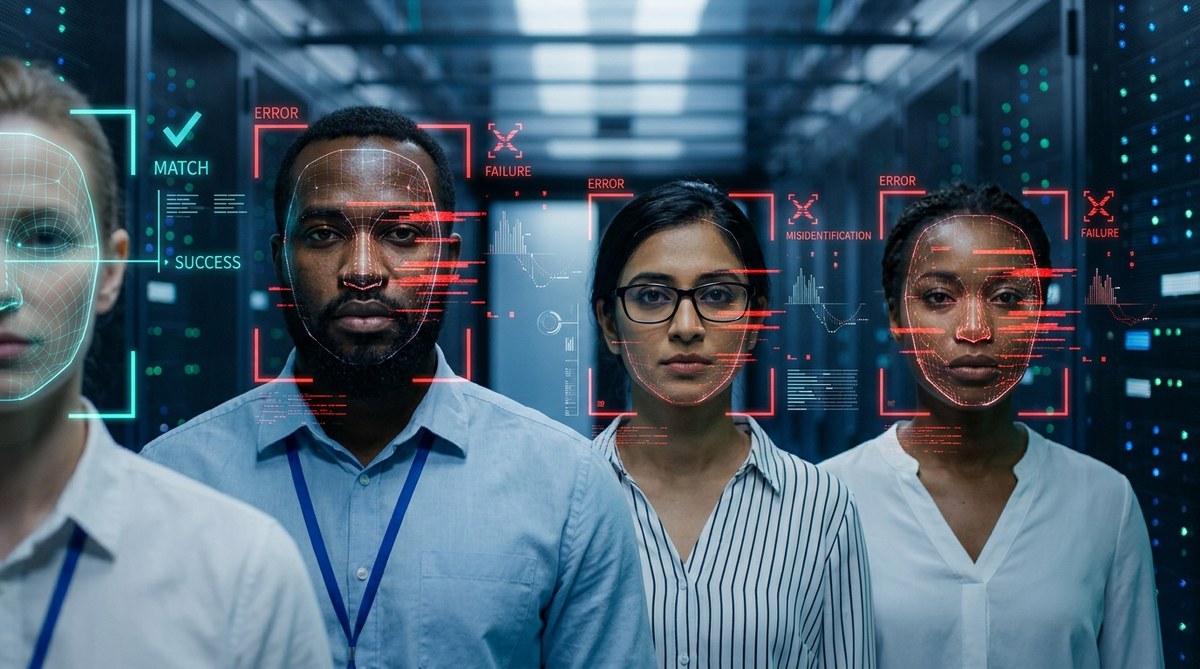
Facial recognition technology has become increasingly common in security systems, airports, smartphones, and even retail stores. However, behind its shiny surface lies a troubling reality: significant bias and discrimination. These issues not only threaten fairness but also pose serious risks to security and civil liberties. People of color often face higher misidentification rates, leading to wrongful arrests, surveillance overreach, and erosion of trust in law enforcement and government institutions. Understanding the roots of these biases is essential to advocate for fairer technology and smarter policies.
Facial recognition bias and discrimination stem from flawed datasets and algorithms, disproportionately affecting people of color. Recognizing these issues is vital for developing fairer systems, implementing better policies, and protecting civil rights in the digital age.
The roots of bias in facial recognition systems
Many facial recognition systems are trained on large datasets of images. These datasets often lack diversity or contain skewed representations of different races, ages, and genders. When algorithms are developed using such biased data, they tend to perform poorly for underrepresented groups. This results in higher error rates for people of color, especially Black and Latinx individuals.
Research shows that these inaccuracies are not accidental but stem from systemic issues in data collection and algorithm design. For example, a study by the National Institute of Standards and Technology found that facial recognition systems are less accurate for Asian and Black faces compared to white faces. These disparities can lead to false positives or negatives, which can have serious consequences in law enforcement or border control contexts.
How datasets contribute to discrimination
Training data is the foundation of machine learning algorithms. If the data predominantly features images of white faces, the system will become more adept at recognizing white faces than others. This is similar to how a student who only studies one subject will excel in it but struggle with others.
Common mistakes include using datasets with limited racial diversity or labeling images incorrectly. These errors are magnified when algorithms are deployed in real-world settings where accuracy is critical.
Techniques that worsen bias include:
– Over-reliance on small, unrepresentative datasets
– Ignoring demographic differences when testing algorithms
– Failing to update systems with diverse, current data
Conversely, adopting more inclusive datasets and regularly testing systems across different groups can reduce bias.
The impact of bias and discrimination on security and civil rights
Bias in facial recognition can lead to wrongful arrests, increased surveillance of marginalized communities, and erosion of privacy rights. Wrongful arrests happen when misidentification occurs, often disproportionately affecting people of color. For example, there have been documented cases of Black men being wrongly detained due to errors in facial recognition matches.
In addition, overuse of facial recognition surveillance can lead to a chilling effect on free expression and assembly. Communities may feel watched and intimidated, discouraging participation in protests or activism. This undermines civil rights and creates a climate of mistrust.
Real-world examples and consequences
A notable incident involved Robert Williams, a Black man wrongly identified and arrested based on faulty facial recognition. Such cases highlight that these technologies are not infallible and can reinforce existing racial biases.
Moreover, governments deploying facial recognition for mass surveillance often do so without clear legal frameworks, risking violations of constitutional rights. When biases go unaddressed, these systems can become tools of systemic discrimination rather than security aids.
Practical steps to mitigate bias and ensure fairness
Addressing facial recognition bias requires a multi-layered approach. Here are some practical processes that organizations, policymakers, and activists can adopt:
-
Audit and assess datasets regularly
Ensure training data is diverse and representative of all communities. Remove skewed or outdated images. -
Test algorithms across demographic groups
Use benchmark tests to evaluate accuracy for different races, ages, and genders. Adjust models based on findings. -
Implement transparent policies and oversight
Make system development, testing, and deployment processes open to independent review. Establish accountability standards.
How to approach bias reduction practically
- Use balanced datasets that include images from various racial and ethnic backgrounds.
- Engage with communities affected by facial recognition deployment to understand their concerns.
- Stay informed about emerging research and best practices in bias mitigation.
As Dr. Joy Buolamwini, founder of the Algorithmic Justice League, notes, “Bias in facial recognition is not just a technical issue but a societal one. Addressing it requires a collective effort to ensure technology serves everyone equally.”
Common pitfalls and mistakes
| Mistake | Explanation | Better approach |
|---|---|---|
| Ignoring demographic testing | Failing to evaluate system performance across groups | Regularly perform group-specific accuracy assessments |
| Relying on small datasets | Limited data increases bias | Use large, diverse datasets with community input |
| Lack of transparency | No clear policies or audits | Implement open review processes and clear guidelines |
| Ignoring user feedback | Not listening to community concerns | Incorporate feedback loops and community engagement |
The future of facial recognition and fairness
Improving facial recognition fairness is possible but requires concerted effort. Researchers are developing techniques like fairness-aware algorithms and bias correction methods. Policymakers are also stepping in to regulate deployment, especially in law enforcement and public spaces.
Balancing security needs with civil rights is crucial. Transparency, accountability, and community involvement can help create systems that protect everyone’s rights. For instance, some jurisdictions are banning facial recognition in certain contexts or requiring rigorous testing before use.
Key strategies include:
– Developing standards for fair AI practices
– Enacting legal frameworks that limit intrusive surveillance
– Promoting community-led oversight and audits
How individuals and advocates can push for change
Understanding the roots and impacts of facial recognition bias empowers you to advocate effectively. Engage with policymakers, support organizations fighting for civil rights, and participate in public consultations. If you are involved in developing or deploying these systems, prioritize ethical design and rigorous testing.
Always question the purpose of facial recognition systems and push for transparency. Remember, technology should serve society, not reinforce discrimination or undermine rights.
A more equitable approach to facial recognition
Bias and discrimination in facial recognition are complex but addressable issues. Recognizing flawed datasets, testing for fairness, and involving communities affected are essential steps. By staying informed and advocating for responsible use, you can help shape a future where security and civil rights coexist.
Building systems that are inclusive and transparent benefits everyone. Whether you are a researcher, policy maker, or concerned citizen, your voice matters in pushing for fair, accountable technology.
Final thought: Embracing fairness in facial recognition
As digital tools become more integrated into our lives, it is vital to keep a close eye on their fairness and impact. Take the time to learn about biases, support policies that promote equity, and demand transparency from organizations deploying facial recognition. Together, we can foster a safer and fairer society where technology uplifts all communities equally.