
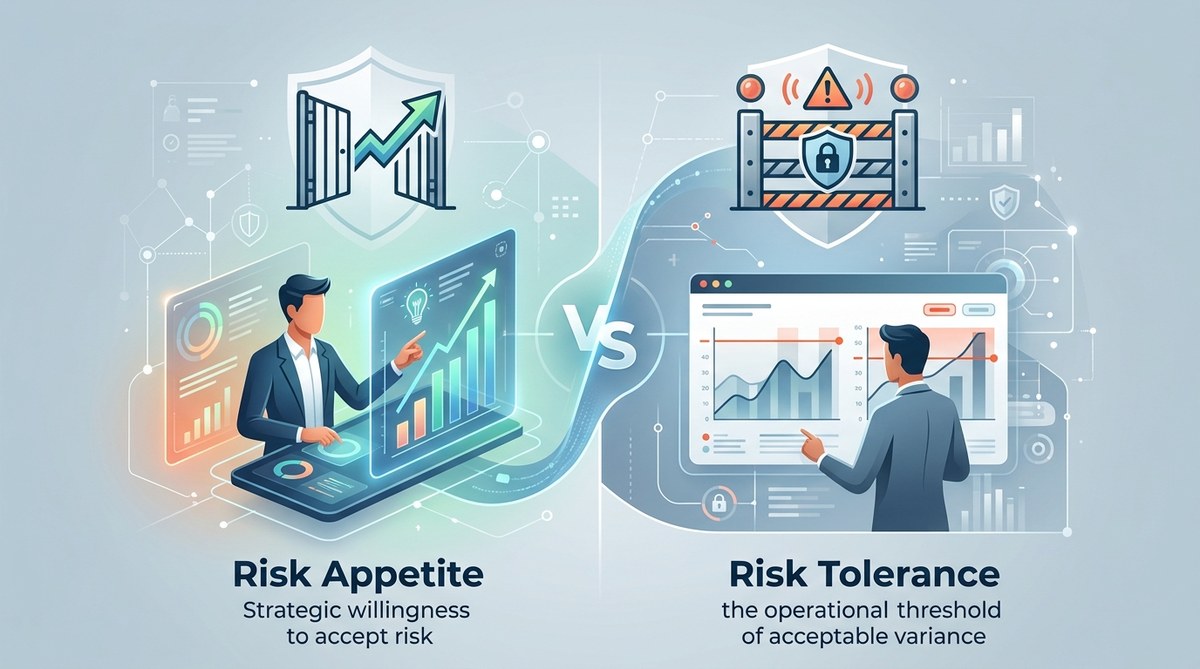
When it comes to managing risks in any organization, understanding the subtle but important distinctions between risk appetite and risk tolerance can make a significant difference. These concepts shape how businesses set boundaries and make decisions in uncertain environments. Misinterpreting them can lead to overexposure or missed opportunities. Knowing how to differentiate and align your risk limits with your strategic goals helps you stay resilient in the face of challenges.
Risk appetite is the broad level of risk a company is willing to accept to achieve its goals, while risk tolerance sets specific boundaries for acceptable deviations. Both are vital for informed decision-making, aligning strategy with risk capacity, and maintaining organizational resilience in complex environments.
Clarifying the core differences between risk appetite and risk tolerance
Understanding risk appetite and risk tolerance starts with recognizing their roles within a risk management framework. Although they are often used interchangeably, they serve distinct purposes in guiding how organizations approach uncertainties.
What is risk appetite?
Risk appetite is the overall level of risk an organization is willing to accept to pursue its strategic objectives. Think of it as a high-level comfort zone. For example, a tech startup might have a high risk appetite for innovation, willing to invest heavily in new technologies despite the possibility of failure. Conversely, a healthcare provider might have a low risk appetite when it comes to patient safety, avoiding any risk that could compromise care quality.
Risk appetite is usually expressed as a qualitative statement or a broad quantitative measure. It reflects the organization’s values, culture, and strategic priorities. It’s a guiding principle that shapes decisions at the top and influences how risk is incorporated into planning.
What is risk tolerance?
Risk tolerance zooms in on acceptable levels of variation within specific risk categories. It defines the boundaries of risk that an organization can withstand without jeopardizing its operations or reputation. For instance, a manufacturing company might have a risk tolerance for equipment downtime of no more than 2 percent annually. Exceeding this threshold would trigger escalation or corrective actions.
Risk tolerance is more precise and often quantified. It translates the broader risk appetite into actionable limits that guide operational decisions, project management, and day-to-day activities.
How risk appetite and risk tolerance connect
While risk appetite sets the overall tone, risk tolerance provides the specific parameters. They are interconnected:
- Risk appetite defines how much risk the organization is generally willing to accept.
- Risk tolerance specifies the thresholds within which risks can fluctuate without requiring strategic shifts.
Aligning these ensures that day-to-day operations stay within the organization’s comfort zone without undermining its strategic ambitions.
Practical steps to integrate risk appetite and risk tolerance
Implementing a clear distinction between these concepts involves a structured approach. Here are three key steps:
-
Define your risk appetite: Engage leadership to articulate the organization’s overall willingness to accept risk. Use strategic goals, stakeholder expectations, and organizational culture as guiding factors. Document these statements clearly for reference.
-
Establish risk tolerance levels: Break down your risk appetite into specific categories such as financial, operational, cybersecurity, and health risks. Set measurable thresholds for each area, ensuring they are realistic and aligned with your overall risk stance.
-
Communicate and monitor: Share these parameters across your organization. Regularly review risk tolerance levels, especially after significant changes or incidents. Use risk dashboards and reports to monitor adherence and adjust as needed.
Practical tools and techniques
| Technique | Purpose | Common Mistakes |
|---|---|---|
| Risk appetite statement | Provides a high-level view of organizational risk stance | Making it too vague or overly optimistic |
| Risk tolerance thresholds | Sets specific limits for risk categories | Ignoring emerging risks or setting unrealistic limits |
| Risk appetite and tolerance matrix | Visualizes the relationship between overall appetite and specific tolerances | Overcomplicating the matrix, leading to confusion |
| Key risk indicators | Tracks risk levels against tolerances | Relying solely on lagging indicators |
“Clear differentiation between risk appetite and risk tolerance supports better decision-making and ensures that operational risks align with strategic goals,” advises a seasoned risk management expert.
Common pitfalls to avoid in managing risk appetite and tolerance
While establishing these parameters is straightforward in theory, organizations often encounter pitfalls that can undermine their effectiveness:
- Confusing the two concepts: Using risk appetite and risk tolerance interchangeably leads to vague strategies and unpreparedness.
- Setting unrealistic thresholds: Overly strict or lax tolerances can either cause unnecessary alarm or expose the organization to undue risk.
- Failing to communicate: Without widespread understanding, risk limits become meaningless.
- Neglecting dynamic environments: Risk appetite and tolerance should evolve with the business landscape, technology, and regulations.
To avoid these mistakes, regularly review your risk parameters and adapt them based on real-world developments.
Techniques and mistakes clarified
| Technique | Benefit | Common mistake |
|---|---|---|
| Establishing clear limits | Enhances decision-making consistency | Ignoring context or changing conditions |
| Using quantitative measures | Facilitates tracking and accountability | Relying on vague or subjective measures |
| Regular review sessions | Keeps parameters relevant | Treating risk limits as fixed and unchangeable |
Final notes on aligning risk limits with your organization’s resilience
Aligning your risk appetite and risk tolerance creates a foundation for resilient decision-making. When these are well-defined and communicated, your team can operate confidently within set boundaries. It helps prevent overextension and ensures that strategic initiatives stay on course without exposing the organization to unnecessary hazards.
Keep in mind that risk management is an ongoing process. Regularly revisit your risk parameters, especially after major changes or incidents. This ongoing review keeps your organization adaptive and prepared for the uncertainties ahead.
Applying risk understanding to stay resilient in a complex world
Knowing the difference between risk appetite and risk tolerance empowers you to make smarter choices. It supports a balanced approach, blending ambition with caution. As you refine your risk management practices, remember that clarity and communication are key. When everyone understands the boundaries, your organization can navigate challenges more confidently.
A practical mindset involves regularly assessing whether your current risk limits still serve your strategic goals. Use this understanding to foster a resilient environment where risks are managed proactively, and opportunities are seized responsibly.