
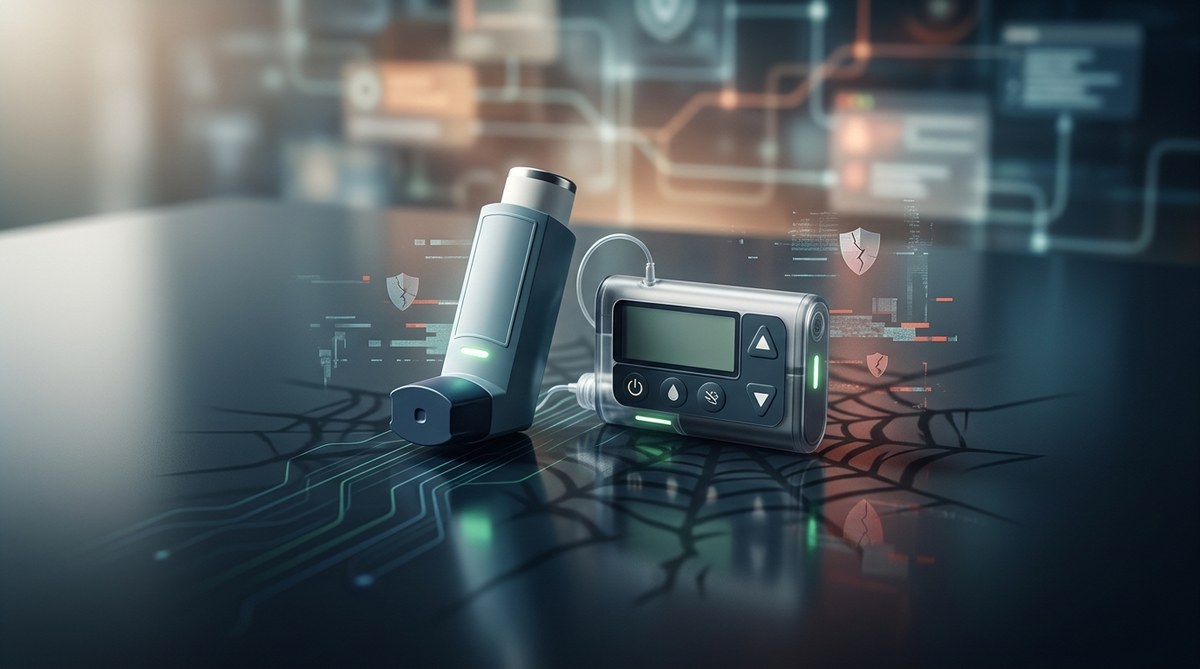
Your smart inhaler or connected insulin pump is a medical miracle. It tracks your dosage, reminds you when to take your medication, and shares data with your doctor. It can make managing a chronic condition feel almost effortless. But there is a side to these devices that manufacturers rarely talk about. Every time that device connects to the internet, it opens a door. A door that could let in hackers, data brokers, or worse. The dangers of smart inhalers are real, and they are growing.
Connected medical devices like smart inhalers and insulin pumps offer real benefits, but they come with serious risks. Cybersecurity flaws can allow remote attacks, data leaks can expose your health secrets, and software bugs can cause life threatening errors. This article breaks down the hidden dangers of smart inhalers and gives you practical steps to protect yourself without giving up the technology that helps you breathe.
How a Simple Inhaler Became a Security Risk
Think about how your smart inhaler works. It uses Bluetooth or Wi-Fi to send data to an app on your phone. That app might sync with a cloud server your doctor can access. Every link in that chain is a potential weak point.
In 2024, security researchers found vulnerabilities in several popular connected inhalers. One flaw allowed an attacker within Bluetooth range to spoof dosage data. They could make it look like you took your medication when you did not. Or worse, they could trigger an alert telling you to take another dose when you had already had one. For asthma patients, double dosing on rescue medication can be dangerous. For insulin pump users, a false reading could lead to a life threatening overdose.
The dangers of smart inhalers are not theoretical. They are happening right now.
Three Major Categories of Risk
Let us break down the specific threats into three areas. Understanding these will help you make an informed choice about your health technology.
1. Cybersecurity Vulnerabilities
Hackers love Internet of Things (IoT) devices because they are often less secure than computers or phones. Medical devices are no exception. Many smart inhalers and pumps use outdated encryption or no encryption at all. Some do not require authentication for firmware updates. That means a hacker could push malicious software onto your device remotely.
Consider what a bad actor could do:
- Change your dosage settings
- Disable your alarm reminders
- Lock you out of your own device (ransomware)
- Use your device as a gateway to attack your home network
A 2025 study from the Ponemon Institute found that 67 percent of connected medical devices had at least one critical vulnerability. The dangers of smart inhalers are part of a much larger problem with healthcare IoT security.
2. Data Privacy Breaches
Your health data is incredibly valuable. Insurance companies, employers, and data brokers all want it. A smart inhaler collects intimate details about your breathing patterns, medication adherence, and even your location. If that data gets leaked, it can be used against you.
Imagine your insurance company learns you skip doses sometimes. They could raise your premiums. Or a data broker sells your asthma information to a marketing firm that targets you with predatory ads. These are not hypothetical scenarios. They have already happened with fitness trackers and other health wearables.
The dangers of smart inhalers extend beyond your physical health to your financial and personal privacy.
3. Safety and Reliability Failures
Connected devices depend on software. Software has bugs. When a bug affects a medical device, the consequences can be catastrophic.
In 2023, a recall was issued for a popular insulin pump after a software glitch caused it to deliver incorrect doses. The company fixed it, but not before several patients experienced severe hypoglycemia. Smart inhalers face similar risks. A failed Bluetooth connection could mean your dose is not recorded. A dead battery could leave you without your rescue medication when you need it most.
| Risk Type | How It Manifests | Real World Example |
|---|---|---|
| Cybersecurity | Remote takeover, false data injection | 2024 Bluetooth spoofing vulnerability in inhaler app |
| Data Privacy | Unauthorized data sharing, profiling | Fitness tracker data sold to insurers (2022) |
| Safety Failure | Software bugs, battery failure, connection loss | 2023 insulin pump recall due to dosing error |
A Practical Safety Checklist for Connected Device Users
You do not have to throw away your smart inhaler. But you should take these steps to reduce your risk.
- Update firmware immediately. When a manufacturer releases a security patch, install it the same day. Do not put it off.
- Turn off connectivity when not needed. If your device has an airplane mode or offline setting, use it. Only sync data when you are ready.
- Use a separate network for medical devices. If you can, create a guest Wi-Fi network for your IoT gadgets. Keep your main computer and phone on a different network.
- Review app permissions. Check what data your inhaler app collects and who it shares it with. Revoke any permissions that seem unnecessary.
- Monitor for unusual behavior. If your device acts strangely, contact the manufacturer immediately. Trust your gut.
“The medical device industry is still catching up to the cybersecurity standards that the banking sector adopted years ago. Patients should assume their device is vulnerable and take proactive steps to protect themselves.” Dr. Elena Vasquez, healthcare cybersecurity researcher at Stanford University.
What Manufacturers Should Be Doing
The burden should not fall entirely on patients. Device makers need to step up. In 2026, the FDA updated its guidance for connected medical devices, but compliance is still voluntary in many areas. Manufacturers should:
- Use end to end encryption for all data transmissions
- Require multi factor authentication for any remote access
- Publish transparency reports about known vulnerabilities
- Offer a physical kill switch to disconnect the device from the network
- Provide long term security updates for the life of the device
Until these practices become standard, the dangers of smart inhalers will remain a serious concern. For a deeper look at how to assess these kinds of threats, read our guide on how to build a risk assessment framework that actually works.
Common Mistakes People Make with Smart Health Devices
Even well intentioned users can fall into traps. Here are the most frequent errors and how to avoid them.
- Assuming the manufacturer has your best interests at heart. They want to sell devices. Security is often an afterthought.
- Using default passwords. Change them immediately.
- Connecting to public Wi-Fi. Never sync your device at a coffee shop or airport.
- Ignoring privacy policies. They are long and boring, but they tell you exactly what data is being collected.
- Forgetting to log out. If you share a device or app account, always log out when you are done.
For more on how to protect your broader digital life, check out our article on how to conduct a personal security audit in 7 simple steps.
The Hidden Danger Nobody Talks About
There is one risk that even security experts sometimes miss. It is the psychological impact. When you rely on a connected device for your health, you trust it completely. That trust can be weaponized.
A hacker does not need to physically harm you to cause damage. They can simply make you lose confidence in your device. If you stop using your smart inhaler because you fear it has been compromised, your health suffers. If you ignore real alerts because you think they are fake, you miss critical medication.
The dangers of smart inhalers include the erosion of trust between patients and the technology they depend on. That is a hard problem to solve with a software patch.
How to Choose a Safer Connected Device
If you are shopping for a new device, or considering upgrading your current one, use this checklist to evaluate security.
- Does the device support automatic security updates?
- Has the manufacturer ever had a major data breach?
- What encryption standards does the device use? (Look for AES 256 or better.)
- Can you use the device in offline mode?
- Does the company have a public bug bounty program?
- What happens to your data if the company goes out of business?
Ask your doctor or pharmacist these questions. If they do not know the answers, push the manufacturer for them. You have a right to know.
For more guidance on protecting your medical information, see our post on 5 critical steps to protect your medical records from data breaches.
Staying Prepared Without Sacrificing Convenience
Connected inhalers and insulin pumps can improve your quality of life. They can catch early warning signs and help you stay on track with your treatment. The goal is not to scare you away from them. The goal is to make you an informed user.
Think of your smart device like a car. You would not leave your car unlocked with the keys in the ignition. You would not ignore a recall notice. Treat your smart inhaler the same way. Lock it down. Update it. Pay attention.
The dangers of smart inhalers are real, but they are manageable. By staying aware and taking a few simple precautions, you can enjoy the benefits of connected health technology without becoming a victim.
Your Health, Your Data, Your Choice
At the end of the day, you are the one who lives with the consequences. Your doctor prescribes the medication. The manufacturer builds the device. But you are the one who decides how much risk you are willing to accept.
Arm yourself with knowledge. Ask hard questions. And never assume that a device is safe just because it has a medical label on it. The connected world offers incredible tools, but it also demands a new kind of vigilance. Stay prepared. Stay informed. And take control of your health security.
For a broader view of how technology is changing the threat landscape, read our analysis of why traditional risk management fails in the age of AI and cyber threats. It will help you understand why the old rules no longer apply.